
China Top 10 Industrial Cutting Technologies Suppliers?
China’s industrial manufacturing sector is moving from basic metal removal toward connected, automated, and energy-efficient production. Industrial cutting technologies now include laser cutting, plasma cutting, waterjet cutting, CNC machining, sawing, and advanced abrasive systems. These technologies serve automotive plants, shipyards, aerospace workshops, construction equipment factories, and precision hardware manufacturers.
Market evidence supports this shift. Grand View Research reports continued expansion in the global machine tools market, driven by automation, digital control, and demand for higher production accuracy. MarketsandMarkets also identifies fiber lasers as a major growth area because they offer fast processing, lower maintenance, and consistent beam quality. Meanwhile, reports from the China Machine Tool Industry Association show China remains a critical manufacturing base, with strong domestic demand for CNC equipment and intelligent factory solutions.
The suppliers reviewed in this article were assessed through practical criteria, including cutting accuracy, maximum material thickness, machine stability, after-sales service, software capability, export experience, and documented industry applications. A factory manager may compare a clean fiber-laser edge on 6-millimeter steel, a waterjet’s cold-cutting performance, or a CNC saw’s repeatability across an entire shift. Small details matter.
No ranking is perfectly universal.
Some companies excel in heavy plate processing, while others focus on compact precision systems or integrated automation. Public data can also be incomplete, especially for privately held manufacturers. Therefore, this overview should support supplier screening, not replace technical audits, sample testing, safety verification, and total-cost analysis. The final selection depends on material, throughput, tolerances, operator skill, and local service capability.
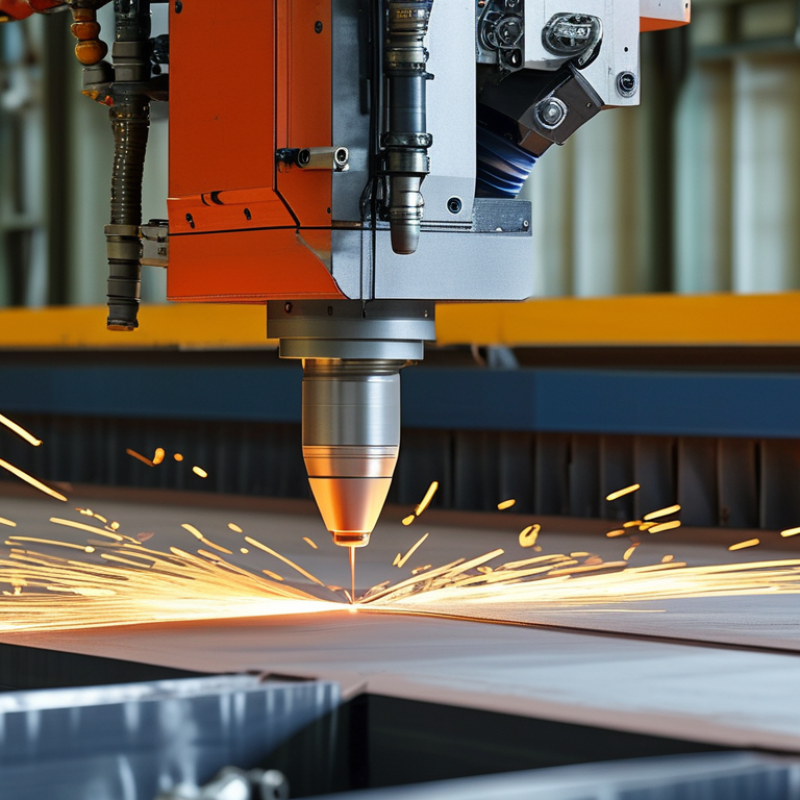
China’s Industrial Cutting Market: 2024 Demand and Capacity Data
China’s industrial cutting market is expanding with broader manufacturing activity. The National Bureau of Statistics reported a 5.8% rise in industrial added value in 2024. Manufacturing growth reached 6.1%, supporting demand for laser, plasma, waterjet, and CNC cutting systems.
Automation is strengthening this demand. The International Federation of Robotics recorded 276,288 robot installations in China during 2023, representing about 51% of global installations. More automated factories require stable cutting accuracy, faster tool changes, and better material traceability. Capacity is also increasing through local machine production, component supply, and process engineering services.
Still, the numbers need careful reading. Robot installations do not directly equal cutting-machine sales. Some factories also postpone upgrades when margins weaken. That gap matters.
For a China top-10 supplier review, buyers should compare cutting speed, kerf quality, uptime, software integration, service coverage, and five-year operating costs. The China Machine Tool Industry Association continues to highlight structural adjustment and uneven recovery across machine-tool segments. This suggests that supplier capacity should be judged by delivered systems, trained technicians, spare-parts readiness, and verified customer data. Brochure claims are not enough. On-site trials remain essential, especially for thick steel, reflective alloys, and mixed-batch production.
| Technology Category | Main Industrial Materials | 2024 China Demand Proxy | Typical Capacity Indicator | Primary Demand Sectors | Demand Outlook |
|---|---|---|---|---|---|
| Fiber Laser Cutting | Carbon steel, stainless steel, aluminum, copper and other sheet metals | 31.28 million vehicles produced in China in 2024, supporting continued demand for high-speed sheet-metal processing. | High automation potential; commonly configured for 1–30 mm sheet and plate processing. | Automotive, electrical equipment, machinery, appliances and metal fabrication | High |
| CO₂ Laser Cutting | Non-ferrous metals, plastics, wood, textiles and selected sheet metals | Demand remains concentrated in established fabrication lines and non-metal processing applications rather than new mainstream metal installations. | Strong installed-base capacity; generally lower energy efficiency than modern fiber systems for metal cutting. | General fabrication, packaging equipment, furniture, signage and specialty manufacturing | Medium |
| Plasma Arc Cutting | Carbon steel, stainless steel and aluminum plate | China produced approximately 1.005 billion tonnes of crude steel in 2024, sustaining heavy-plate processing demand. | High throughput for medium and thick plate; suitable for large-format cutting tables. | Steel fabrication, construction machinery, shipbuilding and structural equipment | High |
| Oxy-Fuel Cutting | Carbon steel and thick ferrous plate | Still relevant for thick-plate processing where cutting speed, operating cost and equipment simplicity are prioritized. | Very high thickness capability; lower precision and larger heat-affected zones than laser or plasma systems. | Heavy fabrication, infrastructure equipment, steel structures and shipyards | Medium–High |
| Waterjet Cutting | Stone, glass, ceramics, composites, rubber, plastics and metals | China’s large construction-materials, machinery and transportation manufacturing base supports diversified waterjet applications. | Cold-cutting process with no heat-affected zone; capacity is usually defined by pump pressure and table size. | Aerospace components, stone processing, ceramics, automotive and composite materials | Medium–High |
| Wire EDM | Hardened steel, carbide, conductive alloys and precision tool materials | China produced approximately 12.89 million new-energy vehicles in 2024, supporting demand for molds, dies and precision components. | High precision and fine-feature capability; relatively low material-removal rate. | Tool and die, molds, aerospace, medical devices and precision engineering | High |
| Electrical Discharge Machining | Conductive hardened metals and complex cavity materials | Growing requirements for complex molds and high-precision parts are linked to automotive, electronics and advanced equipment manufacturing. | High capability for intricate cavities and difficult-to-machine materials; electrode and dielectric management are key constraints. | Injection molds, die casting, aerospace, electronics and medical equipment | High |
| Ultrasonic Cutting | Carbon-fiber composites, glass-fiber composites, honeycomb and technical textiles | China’s commercial aerospace, wind-energy and advanced transportation supply chains are expanding the use of composite materials. | High precision with reduced delamination and fraying; capacity is typically lower than conventional metal-cutting processes. | Aerospace, wind power, automotive lightweighting and advanced materials | Medium–High |
| Abrasive Sawing and Band Sawing | Steel bar, stainless steel, aluminum, copper and structural profiles | China’s industrial output and heavy-equipment manufacturing base continue to require high-volume stock preparation before machining. | High reliability and low unit cost for straight cuts; automation depends on material handling and bundling systems. | Steel service centers, machinery, construction equipment and metal distribution | High |
| Robotic and 3D Contour Cutting | Sheet metal, tubes, profiles, castings and fabricated assemblies | China produced about 556,000 industrial robots in 2024, indicating a large domestic automation ecosystem for integrated cutting cells. | Flexible multi-axis capacity; productivity depends on robot payload, sensor integration, programming and fixture design. | Automotive, rail transit, shipbuilding, construction machinery and customized fabrication | High |
Related Posts
-
How to Choose the Best Industrial Machining Processes?
-
What is Thermal Cutting Systems and How Do They Work?
-
2026 Best Metalworking Automation Systems for Global Buyers?
-

Enhancing Fabrication Productivity in 2026 for Global Buyers
-
2026 Best High Performance Welding Equipment for Global Buyers?
-
How to Choose the Best Industrial Welding Solutions for Your Business?