How to Choose the Best Medium-Alumina Ceramic Ball?
In the quest for optimal performance and durability in industrial applications, selecting the right Medium-Alumina Ceramic Ball is crucial. Recent industry reports indicate that the demand for high-quality ceramic balls is rising significantly, especially for applications requiring corrosion resistance and high-temperature stability. Industry expert Dr. Anna Wang emphasizes, “Choosing the right ceramic ball can enhance efficiency and cut long-term costs.”
The characteristics of Medium-Alumina Ceramic Balls make them ideal for various applications, from grinding to coating. They typically boast superior wear resistance and low porosity, which can lead to better performance in harsh environments. However, not all products are created equal. Understanding the specific needs of your application is essential.
Many users still overlook critical factors like alumina content and size variations. While it’s tempting to focus solely on price, consider the long-term benefits of quality. A poorly chosen Medium-Alumina Ceramic Ball can result in increased maintenance costs and downtime. Thus, reflecting on choices made in selection can lead to more informed, effective decisions that balance cost and performance.
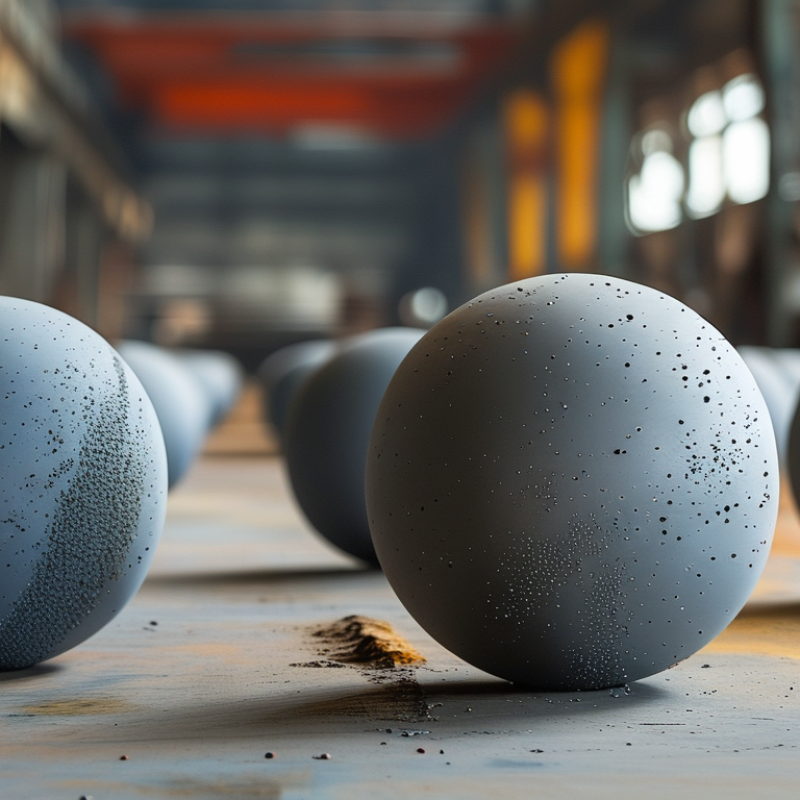
Key Properties of Medium-Alumina Ceramic Balls in Industrial Applications
When selecting medium-alumina ceramic balls for industrial applications, understanding their key properties is essential. These balls typically consist of 50-80% alumina, providing excellent hardness and wear resistance. According to industry reports, medium-alumina ceramics exhibit a compressive strength of over 400 MPa, making them suitable for high-stress environments. Their thermal stability is crucial in processes involving extreme temperatures, often maintaining performance up to 1,600°C.
Ceramic balls also feature low thermal conductivity, which ranges from 10 to 20 W/(m·K), contributing to their effectiveness in thermal insulation. This property is particularly valuable in applications involving heat exchangers and kilns. Medium-alumina ceramic balls have a density of around 3.2 g/cm³, facilitating their use in grinding, milling, and chemical processing. The resistance to chemical corrosion adds to their reliability in harsher environments, which is vital for industries like mining and pharmaceuticals.
Consider the specific requirements of your application when choosing medium-alumina ceramic balls. Assessing the operating conditions will help ensure optimal performance. Experiment with different sizes and shapes for efficiency in your processes. Understanding these factors can enhance your workflow and prolong equipment lifespan. Choosing the right ceramic ball can lead to significant cost savings and improved productivity.
How to Choose the Best Medium-Alumina Ceramic Ball? - Key Properties of Medium-Alumina Ceramic Balls in Industrial Applications
| Property | Value | Significance |
| Alumina Content (%) | 30-80 | Higher alumina content increases strength and wear resistance. |
| Density (g/cm³) | 3.0-3.7 | Density affects performance and compatibility with various applications. |
| Hardness (Mohs) | 8-9 | High hardness improves wear resistance in grinding applications. |
| Compression Strength (MPa) | 300-700 | High strength allows for heavy loads and reduces breakage. |
| Thermal Conductivity (W/mK) | 24-30 | Influences heat management in high-temperature applications. |
Understanding the Role of Alumina Content in Ceramic Ball Performance
When selecting the right medium-alumina ceramic ball, the alumina content plays a crucial role in performance. Higher alumina content typically enhances the mechanical strength and wear resistance of the ceramic. According to a study published by the International Journal of Ceramic Engineering, the ideal alumina level for industrial applications is often between 60% and 80%. At this range, the balls provide excellent durability while maintaining lightweight properties.
The alumina content also influences thermal and chemical stability. A report by the American Ceramic Society indicates that ceramic balls with about 75% alumina exhibit optimal thermal resistance, making them suitable for high-temperature environments. However, too much alumina can lead to brittleness. This trade-off means that selecting the right balance is crucial.
Engineers must consider the specific application needs when choosing alumina levels. In some cases, a ball with lower alumina content might offer better shock resistance. A ceramic ball composed of only 50% alumina can perform well where impact stress is a concern. Thus, the selection process needs careful analysis to ensure reliable performance in varied conditions.
Comparative Analysis of Medium-Alumina vs. High-Alumina Ceramic Balls
When comparing medium-alumina ceramic balls to their high-alumina counterparts, several factors must be considered. Medium-alumina balls typically contain about 50-70% alumina, while high-alumina options boast at least 80% alumina content. This difference impacts not only performance but also cost. A report by the Ceramic Industry Association notes that high-alumina balls provide superior wear resistance, making them ideal for demanding applications. However, this comes at a higher price point. Medium-alumina options often suffice for less critical applications without sacrificing too much on performance.
Moreover, medium-alumina ceramic balls exhibit good thermal stability. However, they may not match the high-temperature endurance of high-alumina variants. According to industry data, high-alumina balls maintain their structural integrity in temperatures exceeding 1500°C, while medium-alumina balls struggle beyond 1200°C. This significant discrepancy can be a deciding factor for industries reliant on extreme conditions. While medium-alumina balls offer a more economical solution, businesses must weigh the cost against their operational demands and longevity to make an informed choice.
Factors Influencing Selection: Size, Shape, and Surface Finish
Choosing the right medium-alumina ceramic ball can significantly impact your project's success. When it comes to selection, size, shape, and surface finish are crucial factors. Each aspect influences performance and durability. The size of the ceramic ball affects its fitting in specific applications. A ball that's too large may not function properly in tight spaces.
Shape plays an essential role as well. Medium-alumina ceramic balls can come in various geometries, including spherical and cylindrical forms. Depending on the intended use, one shape may be better suited than another. For example, spherical balls generally promote better mobility. However, you might find that a different shape fits better in specific machinery.
Understanding surface finish is key to ensuring efficacy. A smooth finish often leads to better flow rates and reduces friction. However, a rougher texture might be advantageous in certain applications where grip is required.
When considering these factors, it's important to reflect on your specific needs. Ensure that the selected ceramic ball aligns with your operational requirements. Evaluate how each factor interacts with your unique application. Optimal performance often demands careful consideration of these elements.
Cost-Benefit Analysis of Medium-Alumina Ceramic Balls in Manufacturing
Choosing the right medium-alumina ceramic ball involves a detailed cost-benefit analysis. Manufacturers should assess both the initial investment and long-term savings. The material’s durability can lead to lower replacement costs over time. However, it is essential to calculate not just the purchase price but also maintenance expenses and downtime. These factors can drastically affect overall costs.
Evaluating the performance of medium-alumina ceramic balls is crucial. They provide enhanced resistance to wear and heat, which can result in improved production efficiency. Yet, not all applications will realize the same benefits, so conducting pilot tests can help identify potential issues. In some cases, the performance boost might not justify the higher cost compared to alternative materials.
A thorough analysis often reveals that while medium-alumina ceramic balls can be more expensive upfront, their longevity and reliability may offset the costs. Still, manufacturers must be cautious. Misjudging the application's requirements could lead to unnecessary expenses. Regular feedback and data collection on performance can lead to better decision-making in the future.