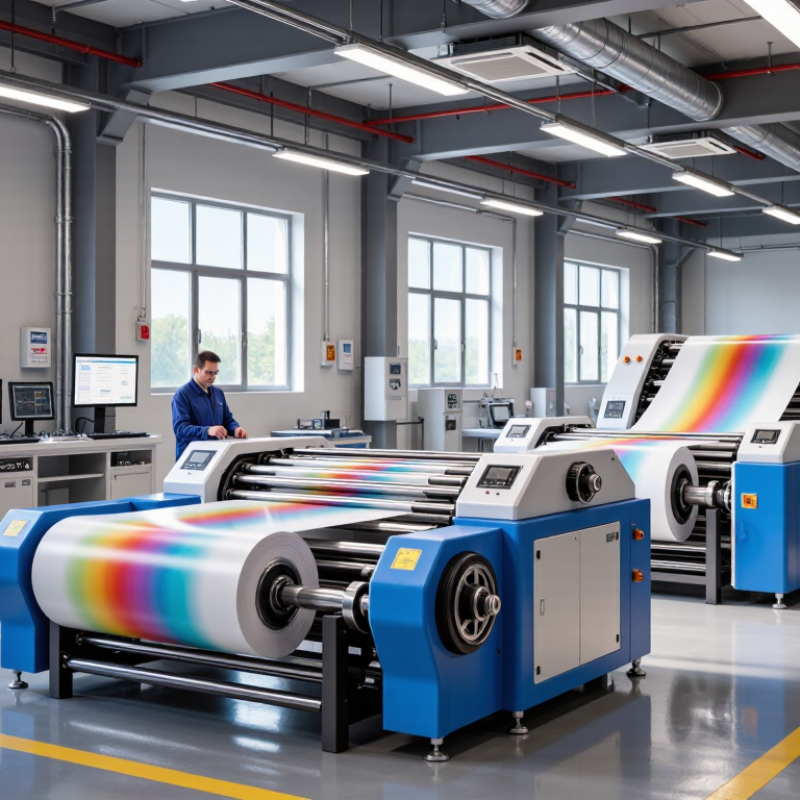
Choosing China’s top Nylon Printing Machine manufacturers requires more than comparing prices and catalog images. A reliable supplier should understand nylon film, ink adhesion, drying control, and production stability. These details affect print clarity, registration accuracy, and waste levels on the factory floor. A machine may look impressive online. Real performance needs closer inspection.
This guide examines manufacturers through practical and verifiable criteria. It considers machine structure, printing speed, color control, energy use, and maintenance access. It also reviews factory experience, engineering support, testing procedures, and export records. Buyers should request sample printing with their actual nylon materials. Ask for production videos, inspection reports, and clear warranty terms. A dependable manufacturer explains limitations instead of promising perfect results.
No supplier is flawless.
Experience still matters. Engineers who understand tension variation can reduce wrinkles during high-speed printing. Operators also need accessible controls, stable web handling, and straightforward cleaning routines. These features become important during long shifts, not during a short showroom demonstration. Certifications may support credibility, but they should be checked against the actual machine model and current documentation. This overview aims to help buyers make a balanced decision based on evidence, not exaggerated marketing. Some information may change as manufacturers upgrade equipment. Independent verification remains necessary before signing a contract.
Nylon is flexible, smooth, and sensitive to heat, so printing requires controlled pressure, ink adhesion, and drying conditions.
Common systems include screen, rotary, and digital printing equipment. Each method suits different production volumes and design requirements.
These functions help prevent blurred edges, uneven coverage, and peeling after washing or repeated handling.
Operators often test ink viscosity before production. Small changes can affect the final shade.
Heat matters greatly. Excessive temperature may shrink or warp the material, while insufficient curing can weaken adhesion.
In large production workshops, automatic feeding and drying units reduce manual handling and improve consistency.
However, automation does not remove every problem. Dust, fabric stretch, and humidity can still create visible defects.
Practical operators inspect printed samples under strong light and record temperature, speed, and ink settings.
Chinese manufacturers commonly develop equipment around production scale, material width, and energy requirements, but buyers should verify testing records, maintenance access, and operator training before purchase.
A polished sample is useful, yet long-run stability deserves closer attention.
Modern nylon printing equipment depends on controlled chemistry, accurate mechanics, and responsive software. Acid-dye inkjet systems are widely used for nylon fabrics. They produce bright shades and detailed patterns. The printhead must deliver stable droplets at high speed. Even a small nozzle variation can create visible streaks.
Fabric pretreatment improves ink absorption and color control. A measured coating helps prevent bleeding on smooth nylon surfaces. Tension rollers keep the fabric flat during printing. This matters when working with lightweight stockings, swimwear, or technical textiles. Infrared or hot-air drying removes moisture without damaging the fibers. Heat fixation then helps the dye bond more securely.
Digital color management connects design files with production settings. Spectrophotometers can check shade accuracy under controlled lighting. Automated cleaning systems also reduce blocked nozzles and unexpected downtime. In practice, operators still need to inspect the fabric by hand. Software cannot always detect edge curling or uneven pretreatment. That is the weak point. Energy use also deserves closer review, especially during continuous drying. Better insulation and zoned heating can reduce waste, but results depend on fabric weight and humidity. Test runs remain essential before full production.
Selecting a nylon printing machine manufacturer in China requires more than comparing online prices. Evaluate proven experience with nylon fabrics, because slippery surfaces can cause poor ink adhesion, blurred edges, and uneven color. Ask for recent production records, machine specifications, and test samples using your actual fabric and ink. A reliable manufacturer should explain drying temperature, web tension, printing speed, and registration accuracy in clear terms.
Visit the factory when possible. Inspect assembly areas, electrical cabinets, quality-control procedures, and spare-parts storage. Request a live demonstration instead of relying on edited videos. Check whether technicians can solve common problems, such as fabric curling or inconsistent drying. Certifications matter, but they do not replace practical evidence. A clean showroom can still hide weak after-sales support. I once underestimated response time, and that mistake affected installation planning.
Tips: Send your fabric before signing. Test at different speeds. Measure color consistency after washing. Ask for a written warranty, training schedule, installation scope, and spare-parts list. Clarify response times for remote and onsite service. Speak with existing customers if possible, while remembering that one positive reference is not enough. Compare several factories using the same checklist. The cheapest quote may exclude essential dryers, software, or commissioning work. Also, do not ignore operator feedback; a technically advanced machine can become difficult to use during a busy production shift.
| Evaluation Dimension | Why It Matters for Nylon | Industry-Reference Data | Evidence to Request from a Manufacturer | Recommended Assessment |
|---|---|---|---|---|
| Machine Configuration | Nylon may be printed on coated textiles, films, labels, and other synthetic substrates. The machine must match the intended production process. | Common configurations include roll-to-roll, roll-to-sheet, flatbed, and hybrid systems. | A complete machine layout, substrate list, feeding method, maximum roll diameter, and finished-product samples. | Select a supplier whose standard platform already supports the required substrate and workflow. |
| Usable Printing Width | The usable width determines whether the equipment can handle narrow labels, apparel panels, banners, or wide textile rolls. | Commercial textile systems commonly cover widths from approximately 1.6 m to 3.2 m, while specialty systems may be narrower or wider. | Technical drawing showing effective print width, media margins, edge-control limits, and optional width configurations. | Allow production margin instead of selecting a machine that operates continuously at its maximum width. |
| Production Speed | Advertised speed can differ substantially from saleable speed because of resolution, ink coverage, drying, maintenance, and fabric handling. | Typical digital textile output varies widely, often from about 20 m²/h for high-quality work to more than 100 m²/h for faster production modes. | A signed test report stating speed, resolution, pass count, ink coverage, substrate, and measured usable output. | Compare saleable throughput rather than the highest headline speed. |
| Resolution and Print Quality | Nylon surfaces can show banding, bleeding, uneven density, or poor small-text definition when ink control is inadequate. | Industrial inkjet systems commonly offer native resolutions from approximately 600 dpi to 1,200 dpi, depending on the printhead and mode. | Close-up samples containing gradients, fine text, solid fills, skin tones, and repeated patterns on the customer’s nylon material. | Use independent visual inspection and color measurements instead of relying only on the stated dpi. |
| Ink Compatibility | Nylon generally requires ink, pretreatment, and fixation conditions that provide adequate adhesion, color strength, and wash resistance. | Acid, pigment, and selected disperse or transfer processes may be used depending on the nylon substrate and end-use requirements. | Ink technical data sheets, safety data sheets, compatibility testing, fixation instructions, and recommended pretreatment specifications. | Do not approve a machine until the complete ink-and-fabric process has passed production testing. |
| Color Management | Consistent color is essential for repeat orders, especially when multiple machines or production sites are involved. | A professional workflow normally includes RIP software, ICC profiles, linearization, spot-color handling, and calibration procedures. | RIP software details, color-profile workflow, calibration records, test charts, and measured color-difference results. | Require repeatability testing using the same file, ink batch, substrate batch, and production settings. |
| Drying and Fixation | Insufficient drying or fixation can cause smearing, poor wash fastness, blocking, and color instability during finishing. | Equipment may use hot-air drying, infrared heating, heat pressing, steaming, or a separate post-treatment process, depending on the ink system. | Temperature-control range, heating-zone layout, line-speed limits, energy consumption, and wash-fastness test results. | Evaluate the entire curing process, not only the printer itself. |
| Media Handling and Tension Control | Stretchable or slippery nylon can wrinkle, skew, or move during printing, causing registration errors and wasted material. | Important features include automatic tension control, edge guides, vacuum tables, anti-static systems, and take-up synchronization. | Media-handling specifications, supported material weights, tension range, registration accuracy, and long-roll test footage. | Test the thinnest, smoothest, and most difficult nylon material planned for production. |
| Printhead and Maintenance Design | Nylon printing environments can be sensitive to humidity, ink drying, dust, and nozzle blockage. | Useful systems include automated capping, flushing, nozzle checks, white-ink circulation where applicable, and controlled ink temperature. | Printhead model, expected service life, daily maintenance schedule, cleaning-fluid requirements, and replacement procedure. | Give additional weight to designs that reduce manual maintenance and unplanned downtime. |
| Build Quality and Automation | Rigid frames, accurate motion systems, and stable electronics improve registration and long-term consistency. | Key items include linear guides, servo motors, automatic calibration, web inspection, emergency stops, and remote diagnostics. | Component list, factory acceptance test, calibration procedure, alarm history, and continuous-operation test results. | Inspect the production machine or request a live video demonstration under comparable conditions. |
| Quality and Safety Compliance | Compliance documentation supports safe installation, import clearance, workplace operation, and customer audits. | Common documentation may include CE-related technical files, electrical safety test reports, electromagnetic compatibility records, and factory quality procedures. | Applicable certificates, declaration documents, wiring diagrams, risk assessment, inspection records, and serial-number traceability. | Verify certificates against the exact model and configuration being purchased. |
| Factory Testing and Acceptance | A formal acceptance process reduces the risk of receiving equipment that performs differently from the quotation. | A robust test normally covers print quality, speed, registration, color consistency, drying, safety functions, and software operation. | A signed factory acceptance test with agreed tolerances, sample approval, punch-list procedure, and shipment-release conditions. | Make acceptance criteria part of the purchase contract rather than an informal promise. |
| After-Sales Service | Downtime can be expensive when specialist technicians or replacement parts are difficult to access. | Important service channels include remote diagnostics, installation training, spare-parts planning, preventive maintenance, and local technical coverage. | Support hours, response-time commitment, engineer availability, training agenda, escalation process, and spare-parts inventory plan. | Score service capacity separately from sales communication. |
| Warranty and Spare Parts | Printheads, dampers, pumps, filters, belts, sensors, and control components may affect operating continuity. | Commercial warranties commonly differ by component and may exclude consumables, printheads, misuse, or improper maintenance. | Written warranty exclusions, spare-parts price list, lead times, recommended stock list, and repair-versus-replacement policy. | Calculate the cost and availability of critical parts over at least three years. |
| Total Cost of Ownership | The purchase price is only one part of the investment; ink, pretreatment, energy, labor, maintenance, finishing, and waste also affect profitability. | A realistic calculation should use cost per saleable square meter or linear meter rather than machine price alone. | Detailed quotation, ink consumption at stated coverage, power requirements, maintenance costs, labor assumptions, and expected waste rate. | Compare at least three production scenarios: low, normal, and high utilization. |
| Supplier Credibility | A stable manufacturer is more likely to support software, parts, upgrades, and process development throughout the machine’s service life. | Useful indicators include a verifiable manufacturing address, documented production process, export experience, technical staff, and transparent legal documentation. | Business registration details, factory audit access, production photos, anonymized customer references, installation records, and signed commercial documents. | Use independent verification and avoid making a decision based only on online listings or showroom claims. |

Note: The numerical ranges are general industry reference points. Actual performance depends on machine configuration, print mode, ink system, nylon substrate, pretreatment, fixation, environmental conditions, and operator practice.
China Top Nylon Printing Machine Manufacturers?
China’s nylon printing machine sector is not a single supplier category. Manufacturers usually fall into three practical groups. Dedicated printing equipment makers focus on rotary, screen, or digital systems. Textile machinery producers often offer wider production lines. Engineering integrators build customized units for unusual fabric widths, drying needs, or color volumes.
Regional clusters matter during supplier selection. Zhejiang has dense textile equipment networks and many suppliers serving fabric printing factories. Jiangsu is known for advanced textile machinery, automation, and process integration. Guangdong combines machinery production with strong apparel and flexible-material manufacturing demand. Fujian also has relevant textile and sportswear supply chains. These clusters can shorten delivery times for parts and make technical visits easier.
Nylon requires careful control because heat, tension, ink adhesion, and fabric treatment interact closely. A useful factory assessment should include live test printing on the buyer’s actual nylon fabric. Check registration accuracy, drying temperature stability, cleaning access, and software records. Ask for maintenance logs, operator training plans, and realistic production samples. Small details matter.
A polished showroom is not enough. After-sales support may vary between neighboring suppliers. Some factories communicate clearly but document poorly. Others provide excellent drawings yet respond slowly to process problems. This is where careful verification becomes necessary. Regional proximity helps, but it cannot replace measurable testing, traceable specifications, and direct technical communication.
China Top Nylon Printing Machine Manufacturers?
When purchasing a nylon printing machine in China, compare process data, not only the quoted price. Ask for a live sample using your film, ink, and artwork. Check registration accuracy, drying performance, web tension, and cleaning time. A useful factory visit includes a test print at your planned production speed. Watch the operator change rolls. Small delays often reveal hidden costs.
Quality control should begin before shipment. Request inspection records for cylinders, tension sensors, temperature controls, and electrical components. Confirm the machine’s acceptable color variation and registration tolerance in writing. Measure printed samples with your own inspection tools when possible. A polished demonstration can hide unstable results. I have learned that one short sample run rarely proves long-term reliability. A longer trial is more revealing.
After-sales service deserves equal attention. Confirm spare-part availability, remote diagnostic methods, training hours, and technician response times. Ask who handles problems after installation, not just who closes the sale. The service agreement should define installation support, warranty limits, travel charges, and software updates. Keep critical parts such as sensors and heating elements on site. Even experienced buyers sometimes underestimate operator training. That mistake can turn a capable machine into an inconsistent production line.
A practical buyer-side benchmark for comparing nylon printing machine suppliers. The weighting emphasizes technical fit, quality control, purchasing value, and after-sales support without using company or brand data.
The percentages represent a procurement scoring model: technical and purchasing suitability should be verified against substrate, printing width, production speed, registration accuracy, inspection records, spare-parts availability, installation support, and response time.