
Top 10 Traction Lift Manufacturers for Global Buyers

Traction Lift technology remains central to modern vertical transportation, especially in offices, hospitals, hotels, and high-rise homes. It uses ropes, sheaves, and counterweights to move cabins efficiently through tall buildings. The machinery may sit above the shaft, inside it, or within a compact machine-room-less design. Small engineering choices matter.

Fortune Business Insights reports that the global elevator market reached approximately USD 88.6 billion in 2023. Its forecast expects continued expansion through 2032, supported by urbanization, replacement demand, and stricter accessibility expectations. However, this figure combines elevators and escalators. It does not isolate the Traction Lift segment, which is an important limitation for careful buyers. Mordor Intelligence also identifies modernization and smart-building integration as major market drivers. These trends affect procurement, maintenance, and long-term operating costs.

Safety remains the foundation. During his famous 1854 elevator demonstration, industry pioneer Elisha Otis reportedly declared, “All safe, gentlemen! All safe!” The words were brief. The principle still matters. A reliable manufacturer must demonstrate compliance, testing discipline, spare-parts support, and transparent service coverage. Buyers should examine rated load, travel speed, energy performance, braking systems, control technology, and local technician availability. Brand reputation alone is not enough.

This guide reviews ten leading Traction Lift manufacturers for global buyers. It considers product breadth, regional presence, innovation, certification practices, and after-sales reliability. Rankings are never perfect. Local conditions can change the result. A strong supplier in one market may be a poor fit elsewhere. That is why technical evidence should stand beside market reputation.
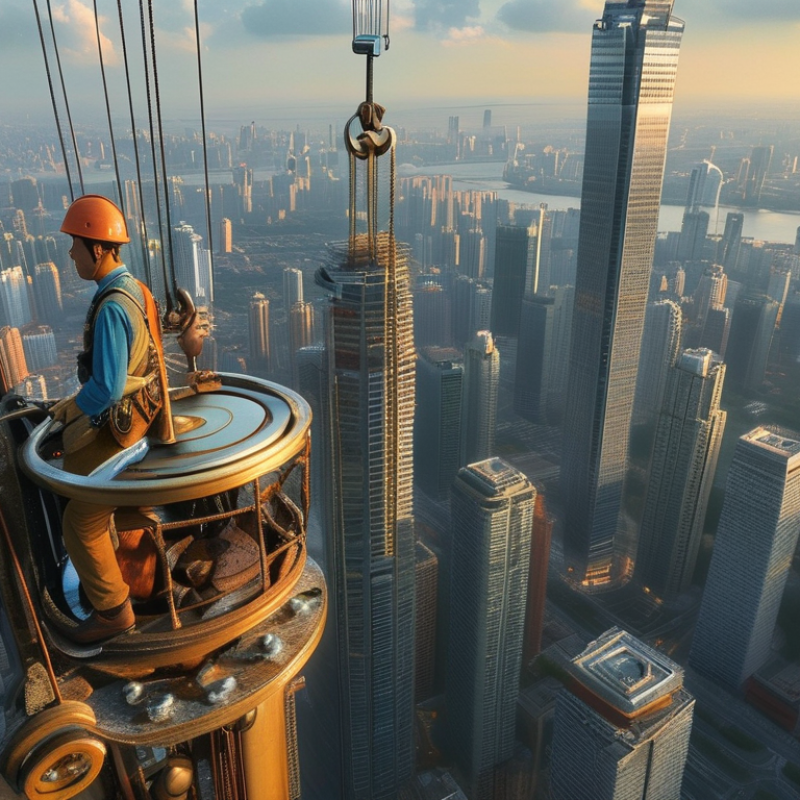
Top 10 Traction Lift Manufacturers for Global Buyers

What Traction Lifts Are and How Their Systems Work

A traction lift moves its car through steel ropes, a grooved sheave, and a counterweight. An electric motor turns the sheave, creating controlled upward or downward motion. The counterweight offsets much of the car’s mass. This reduces motor demand, especially when the car carries a balanced load.

Modern systems usually use variable-frequency drives for smoother starts and stops. Gearless machines suit taller buildings, while geared systems can serve moderate-rise projects. Machine-room-less layouts save plant-room space, but maintenance access may become less convenient. Small detail, big consequence.

Fortune Business Insights’ 2024 Elevator Market report projects steady global growth through 2032, supported by urban construction and modernization. The International Energy Agency reported that buildings consumed about 30% of global final energy in 2022. Lift efficiency therefore matters beyond the shaft. Regenerative drives can return braking energy to a building’s electrical network. However, reported savings depend on traffic patterns, standby controls, and local electricity conditions. A brochure figure is not a measured result. Buyers should request duty-cycle testing, emergency lowering details, rope-life estimates, and compliance evidence against applicable safety standards. Seemingly minor vibration can signal alignment, guide-rail, or installation problems. Expecting zero maintenance is unrealistic.

How the Top 10 Manufacturers Are Selected and Compared

Selecting the top ten traction lift manufacturers requires more than reading product brochures. Our comparison starts with verified operating data, including rated load, lifting height, travel speed, duty cycle, and energy use. We check whether each figure matches the intended warehouse or industrial environment.

Practical experience matters. We review factory quality procedures, inspection records, safety documentation, and service response plans. Field references can reveal details that brochures omit, such as door clearance, turning space, battery access, and performance on uneven floors. We also compare training support, spare-parts availability, warranty terms, and maintenance instructions.

Numbers can mislead. A lower purchase price may hide higher downtime or difficult repairs. We therefore assess five areas: engineering capability, safety performance, operating cost, after-sales support, and delivery reliability. Independent test reports and traceable certifications strengthen a manufacturer’s score. Yet some published figures remain difficult to verify. We record that uncertainty rather than forcing a perfect ranking. A neat spreadsheet is not enough. Final selection should reflect site conditions, operator skill, local regulations, and the buyer’s long-term service capacity. Manufacturers with strong products but weak documentation may deserve further review, not automatic rejection.

Product Range, Technology, and Global Market Coverage

Top 10 Traction Lift Manufacturers for Global Buyers

Product range is a practical starting point for comparing the top ten traction lift manufacturers. Most offer geared and gearless systems for offices, hotels, hospitals, and residential towers. Buyers should check rated loads, travel speeds, cabin sizes, and machine-room requirements. A compact machine-room-less design may simplify installation in a narrow urban shaft.

Technology separates mature suppliers from ordinary producers. Modern traction lifts often include regenerative drives, destination control, emergency lowering, and remote fault monitoring. Door sensors should respond smoothly, even with shopping carts or hospital beds. Seismic options matter in earthquake-prone regions. Energy data also deserves attention, not just attractive efficiency claims.

Global coverage involves more than exporting equipment. Reliable manufacturers provide regional engineering, trained commissioning teams, spare-part warehouses, and clear service procedures. Their lifts should match local voltage, climate, accessibility, and safety requirements. A supplier serving humid coastal cities needs stronger corrosion protection than one serving dry inland areas. Certification records should be checked independently.

A polished brochure is not proof of field performance. Real project references, maintenance response times, and warranty terms reveal more. No ranking stays perfect. Some suppliers offer excellent technology but limited local support, while others provide dependable service with fewer advanced features. Buyers should compare total ownership costs, not only the initial quotation.

Safety Standards, Customization, and Energy Efficiency

Top 10 Traction Lift Manufacturers for Global Buyers

Safety Standards, Customization, and Energy Efficiency

Global buyers should assess traction lift manufacturers beyond price and catalogue ratings. Safety begins with documented design controls, certified components, emergency communication, braking systems, and reliable door protection. Ask for test records, inspection procedures, and maintenance instructions that match the destination market. Standards differ across regions, so local approval must be verified before ordering.

Customization affects both comfort and long-term performance. Manufacturers should adapt car dimensions, door layouts, travel height, control systems, and load capacity to the building. Climate also matters. Humidity, dust, voltage variation, and temperature can influence component life. Request clear drawings and a site-specific risk review. Small details matter.

Energy efficiency needs practical evidence. Gearless traction systems, regenerative drives, LED lighting, and standby controls can reduce consumption. However, savings depend on traffic patterns, installation quality, and maintenance. A highly efficient lift may perform poorly if settings are not calibrated. Look for measured data, service records, spare-parts planning, and technician training. These details reveal operational reliability better than marketing claims.

No specification is perfect. A low-energy design may increase purchase costs, while excessive customization may complicate repairs. Buyers should compare lifecycle value, not only the initial quotation. A transparent manufacturer will explain limitations, identify trade-offs, and provide evidence instead of promising effortless performance.

Top 10 Traction Lift Manufacturers for Global Buyers - Safety Standards, Customization, and Energy Efficiency

Independent comparison of representative traction-lift product capabilities and applicable international requirements; company and brand names are intentionally omitted.

Rank Manufacturer Profile Typical Application Rated Load Range Typical Speed Range Drive Configuration Applicable Safety Standards Energy-Efficiency Features Customization Capability Safety and Compliance Focus Global Buyer Considerations
1 Profile 01
High-capacity commercial systems
Office towers, hotels, hospitals, and mixed-use buildings 1,000–2,500 kg 1.0–3.0 m/s Gearless permanent-magnet synchronous motor; machine-room-less or machine-room arrangement EN 81-20 and EN 81-50; local building and electrical codes required High
Variable-frequency drive, standby controls, LED lighting, optional regenerative drive
High: cabin finishes, door sizes, destination control, fire-service operation, seismic packages Overspeed governor, safety gear, buffers, door-lock monitoring, emergency battery lowering Confirm local certification, voltage, climatic design, shaft dimensions, and service coverage before purchase
2 Profile 02
Urban high-rise systems
High-rise residential and commercial developments 800–2,000 kg 1.75–6.0 m/s Gearless traction with permanent-magnet motor and advanced dispatch control EN 81-20/50 or ASME A17.1/CSA B44, depending on market High
Regenerative energy recovery, sleep mode, traffic-adaptive dispatching
High: panoramic cabins, hall fixtures, access control, group supervisory control Multiple safety circuits, emergency communication, fire recall, overspeed protection High-speed designs require detailed traffic analysis, guide-rail alignment, and ride-quality testing
3 Profile 03
Mid-rise residential systems
Apartment buildings, condominiums, and student housing 450–1,000 kg 0.63–1.75 m/s Compact gearless or geared traction machine-room-less design EN 81-20/50, ASME A17.1/CSA B44, or applicable national standard Medium–High
Variable-speed control, automatic lighting shutdown, efficient standby mode
Medium–High: cabin materials, door finishes, dimensions, access-control integration Door interlocks, emergency alarm, battery rescue device, pit and car-top inspection controls Check pit depth, overhead clearance, ambient temperature, and emergency-rescue requirements
4 Profile 04
Low-rise machine-room-less systems
Low-rise residential, retail, and small office buildings 320–800 kg 0.63–1.0 m/s Compact traction system with permanent-magnet or geared motor EN 81-20/50 or equivalent regional lift safety code Medium–High
Efficient motor, LED lighting, automatic fan and display shutdown
Medium: standard cabin modules, door configurations, finishes, and control options Certified safety gear, overspeed governor, door-lock circuit, emergency lighting Suitable for constrained sites; verify accessibility dimensions and local approval procedures
5 Profile 05
Industrial and freight traction systems
Warehouses, factories, logistics centers, and service buildings 1,000–5,000 kg 0.25–1.0 m/s Heavy-duty geared or gearless traction machine with reinforced cabin and doors EN 81-20/50, ASME A17.1/CSA B44, and applicable industrial regulations Medium
Variable-frequency drive, efficient standby controls, optional regeneration
Very high: platform dimensions, load distribution, door protection, impact-resistant finishes Load monitoring, robust door interlocks, emergency stop circuits, controlled access Define duty cycle, loading method, pallet dimensions, impact loads, and environmental exposure
6 Profile 06
Public-accessibility systems
Transport hubs, public buildings, schools, and healthcare facilities 630–1,600 kg 0.63–1.75 m/s Gearless traction with automatic doors and accessibility-oriented controls EN 81-70 accessibility provisions; EN 81-20/50 or local equivalent High
Efficient traction motor, LED lighting, standby mode, regenerative option
High: tactile controls, audible announcements, visual indicators, stretcher-compatible cabins Emergency two-way communication, fire-service operation, backup lighting, door safety sensors Confirm accessibility, fire, vandal-resistance, sanitation, and public-use requirements
7 Profile 07
Premium architectural systems
Luxury hotels, premium residences, landmark buildings, and retail developments 630–1,600 kg 1.0–3.0 m/s Gearless permanent-magnet traction with customized cabin and landing interfaces EN 81-20/50 or ASME A17.1/CSA B44, subject to project location High
Regenerative drive, smart dispatching, efficient ventilation and lighting controls
Very high: stone, glass, metal, wood, custom ceilings, lighting, digital displays Standard certified safety components integrated with architectural interiors Require engineering approval for cabin mass, balance, fire rating, and non-standard finishes
8 Profile 08
Modernization and replacement systems
Existing buildings requiring controller, machine, or complete lift replacement 450–1,600 kg 0.63–2.5 m/s Traction retrofit package with new controller, motor, door operator, and safety interfaces Current local code, inspection rules, and applicable modernization provisions High
Modern variable-frequency drive, efficient motor, standby and regenerative options
High: compatibility with existing shaft, entrances, landing controls, and building systems Risk assessment, updated door protection, emergency communication, and code-compliant controls Conduct a site survey covering shaft measurements, existing wiring, structural loads, and downtime limits
9 Profile 09
Seismic and climate-adapted systems
Earthquake-prone regions, coastal areas, hot climates, and cold-weather sites 450–2,000 kg 0.63–2.5 m/s Traction system with reinforced guide components and environmental protection options Local lift code plus project-specific seismic, wind, corrosion, or temperature requirements Medium–High
Efficient motor control, standby mode, and optional regenerative drive
High: seismic switches, corrosion-resistant materials, heating, ventilation, and water protection Seismic detection, controlled shutdown, emergency operation, protected electrical equipment Specify seismic category, salt exposure, temperature range, humidity, flooding risk, and backup power
10 Profile 10
Connected smart-building systems
Digitally managed offices, residential complexes, campuses, and large facilities 630–2,000 kg 1.0–3.0 m/s Gearless traction with networked controller and group-dispatch platform EN 81-20/50, ASME A17.1/CSA B44, and relevant electrical and cybersecurity policies High
Traffic optimization, energy monitoring, sleep mode, regenerative drive option
High: destination dispatch, mobile access, building-management integration, remote diagnostics Remote fault alerts must not replace required inspections, tests, or physical safety devices Review data ownership, network security, software support period, offline operation, and local service response

Technical note: Load and speed figures are representative market ranges rather than company-specific claims. EN 81-20 and EN 81-50 address current European lift safety and examination requirements; ASME A17.1/CSA B44 is widely used in North America. Actual compliance, energy performance, accessibility, and customization must be verified against the destination country’s adopted code, inspection authority, project design, and certified documentation. Energy-efficiency assessments may be performed using ISO 25745-2 methodology.

Service Support, Total Cost, and Buyer Evaluation Criteria

Top 10 Traction Lift Manufacturers for Global Buyers

Service support often separates a reliable traction lift from an expensive interruption. Grand View Research estimates the global elevator market could grow at about 6% annually through 2030, increasing pressure on maintenance capacity. Buyers should compare technician coverage, spare-parts warehouses, remote monitoring, and emergency response times. A low purchase price means little when a damaged door controller waits six weeks at customs.

Total cost needs a wider calculation. Include installation, civil works, energy use, inspections, software, planned maintenance, and modernization. The U.S. Department of Energy notes that elevator systems can represent a meaningful share of electricity use in commercial buildings, especially in high-traffic properties.

Regenerative drives may reduce consumption, but savings depend on traffic patterns and building design. Claims can sound impressive. Ask for measured field data.

Tips: Request three years of service-cost examples from similar buildings. Check parts availability near the project site. Require response-time guarantees in writing. Compare warranty exclusions carefully. Interview two existing customers, not only the manufacturer’s references. A scoring sheet should weight service quality, total cost, safety documentation, delivery reliability, and lifecycle data. The cheapest quotation may still be the weakest decision. Reports from Fortune Business Insights and Mordor Intelligence use different market definitions, so buyers should question every headline figure. That extra doubt is useful.

Translate