What is a Vibration Measuring Device and How Does it Work?
Vibration measuring devices play a crucial role in various industries, from manufacturing to aerospace. These tools help monitor equipment health and improve operational safety. Dr. Emily Carter, a leading expert in vibration analysis, states, "Understanding vibrations is key to preventing costly failures."
Vibration measuring devices can detect anomalies in machinery. They utilize sensors to capture vibration data, which is then analyzed. This process reveals potential issues before they escalate. For instance, excessive vibrations can indicate misalignment or wear. Identifying these problems early saves time and money.
Despite their benefits, users must be cautious. Not all vibrations indicate serious issues. Some may be normal for specific machines. Therefore, understanding context matters. Relying solely on data without human insight can lead to unnecessary interventions. This duality highlights the need for both technology and expertise in vibration analysis.
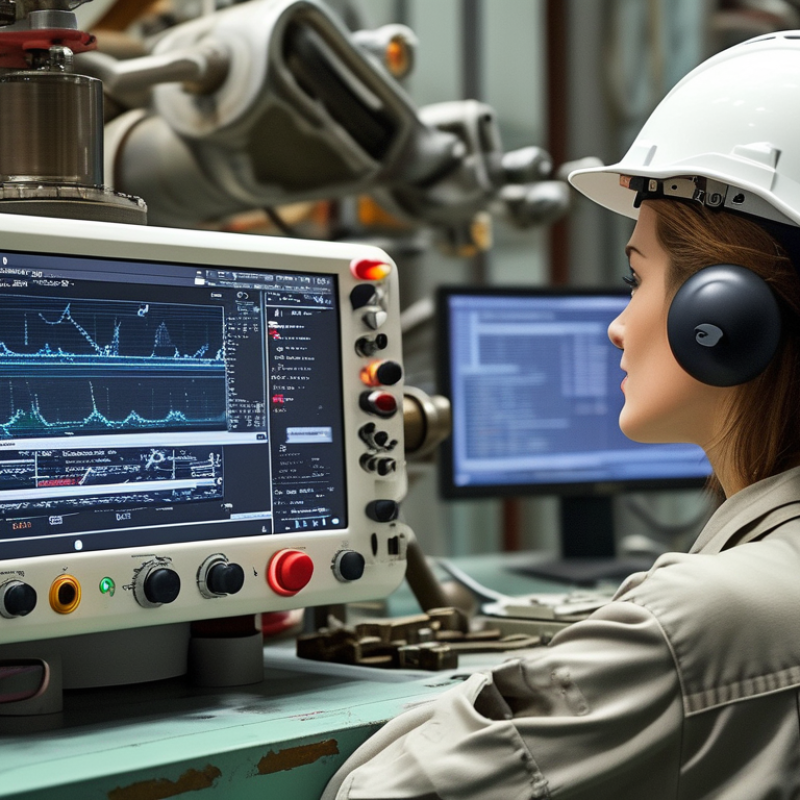
What is a Vibration Measuring Device?
A vibration measuring device is a crucial tool in many industries. It quantifies vibrations in machinery and structures to ensure smooth operation. These devices detect oscillations in mechanical systems. They are essential for predictive maintenance and safety protocols.
According to a report from the International Society of Automation, over 50% of machinery failures relate to vibration issues. This highlights the significance of timely monitoring. Vibration measuring devices can identify potential problems before they escalate. For instance, sudden spikes in vibration levels can indicate imbalance or misalignment in equipment. There’s often a lag between detection and action, which can lead to costly downtimes.
Not all devices provide the same accuracy. Some may struggle with environmental factors like temperature and humidity. While many use accelerometers, these must be calibrated correctly. Miscalibration can lead to incorrect data that may misguide maintenance teams. The challenge lies in ensuring reliable data while minimizing errors.
What is a Vibration Measuring Device and How Does it Work?
| Parameter | Description | Typical Range | Measurement Units |
| Vibration Frequency | The frequency at which a vibrating object oscillates. | 1 Hz - 10 kHz | Hertz (Hz) |
| Acceleration | The rate of change of velocity of the vibrating object. | 0 - 500 g | g (gravitational force) |
| Velocity | The speed of the vibrating motion of an object. | 0 - 200 mm/s | mm/s (millimeters per second) |
| Displacement | The distance a vibrating object moves from its rest position. | 0 - 10 mm | mm (millimeters) |
| Sensor Type | The method or technology used for measuring vibrations. | Piezoelectric, MEMS, etc. | N/A |
| Applications | Industries where vibration measurement is critical. | Manufacturing, Aerospace, Automotive, etc. | N/A |
Types of Vibration Measuring Devices: An Overview
Vibration measuring devices play a significant role in various industries. They help monitor the health of machines and identify issues. Common types include accelerometers, velocity sensors, and displacement transducers. Each device serves a unique purpose in measuring vibrations.
Accelerometers are widely used. They measure acceleration forces on an object. These devices can be compact, yet powerful. They provide real-time data on vibrations. Velocity sensors, on the other hand, measure the speed of vibrating objects. They often feature a simple design and can be used in diverse applications. Displacement transducers focus on the movement of an object. These sensors track how far a surface moves and can pinpoint subtle shifts.
Choosing the right device can be challenging. Different applications require different types of measurements. Sometimes, devices may provide conflicting information. Users need expertise to interpret the data correctly. Understanding the limitations and capabilities of each type helps ensure accurate vibration analysis. Error can arise if the wrong sensor is selected. Therefore, careful consideration is key in vibration measurement practices.
Principles of Operation for Vibration Measuring Devices
Vibration measuring devices are essential in monitoring equipment health. Their operation relies on the principles of vibration analysis. These devices detect the amplitude, frequency, and phase of vibrations in machinery. This data helps identify any anomalies. Anomalies could indicate wear, imbalance, or misalignment.
One common method is the use of accelerometers. These sensors convert vibration into an electrical signal. According to a study from the International Journal of Vibration Control, about 80% of mechanical failures are a result of vibration issues. Early detection through effective measurement can prevent costly downtimes and repairs.
Tips: Regularly calibrate your vibration measuring devices for accuracy. Keep an eye on frequency ranges most relevant to your machinery.
Vibration data can be complex. Interpretation requires expertise. Factors like environmental conditions or the machinery's operational state can affect readings. Misinterpretation can lead to unnecessary maintenance actions. Use caution and consult industry reports for reliable insights.
Tips: Understand the operational context. Familiarize yourself with baseline readings for better assessments.
Applications of Vibration Measurement in Industry
Vibration measurement plays a crucial role in various industrial applications. It helps monitor equipment conditions and ensures operational efficiency. Accurate vibration data can detect anomalies early, reducing costly downtime. Industries like manufacturing and transportation heavily rely on these measurements.
In manufacturing, machines often run at high speeds. Any imbalance or misalignment can cause excessive vibrations. This leads to wear and tear on components. Regular vibration analysis can identify these issues before they escalate. This proactive approach enhances lifespan and reliability.
In transportation, vibration monitoring helps maintain structural integrity. Bridges and roads experience constant stress and strain. Monitoring vibration can indicate potential failures or the need for repairs. However, there are challenges in interpreting data. Misinterpretations can lead to unnecessary interventions. Effective analysis requires expertise and careful consideration.
Vibration Measurement in Industry
Factors Influencing Vibration Measurement Accuracy
Vibration measurement plays a crucial role in various industries. Factors affecting accuracy are essential to understand. Environmental elements, such as temperature and humidity, can impede effective measurement. According to a report by the International Organization for Standardization (ISO), variations in these conditions can lead to discrepancies of up to 15% in results.
Another significant factor is sensor placement. Incorrect positioning can distort readings. A study published in the Journal of Engineering Mechanics revealed that misalignment can cause inaccuracies beyond 10%. This situation often arises in complex machinery where access is limited. Re-evaluating sensor locations periodically helps mitigate this issue.
Additionally, operator expertise cannot be overlooked. A skilled technician enhances the reliability of vibration data. Industry data indicates that improper handling accounts for nearly 20% of measurement errors. Training programs can bridge this gap, fostering better practices. Recognizing these factors promotes improved measurement accuracy and operational efficiency.