Top Metalworking Innovation Trends for Global Buyers

Global metalworking is entering a practical, demanding phase. Metalworking innovation trends now reach beyond faster machines and polished factory displays. They affect material selection, workforce skills, energy use, production data, and supplier accountability.

Terry Wohlers, a widely cited additive manufacturing expert, has said, “The future of manufacturing is digital.” His observation remains relevant for global buyers comparing CNC automation, metal additive manufacturing, robotics, and digital twins. These technologies can reduce setup time, detect tool wear, and support more consistent production. However, impressive software does not guarantee reliable parts. A factory may own advanced equipment yet struggle with calibration, operator training, or weak data controls.

The strongest suppliers connect innovation with measurable evidence. Buyers should examine cycle-time records, tolerance data, maintenance histories, and material traceability. Ask how a machine performs on stainless steel, aluminum, or heat-resistant alloys. Request sample parts, inspection reports, and clear quality procedures. ISO 9001 certification can support confidence, but it should not replace technical evaluation. That point is easy to overlook.

This overview of Metalworking innovation trends considers automation, artificial intelligence, sustainable machining, smart tooling, and additive production. It also examines the less attractive questions: repair costs, cybersecurity exposure, integration delays, and skills shortages. Not every trend deserves immediate investment. Some solutions remain expensive, immature, or difficult to scale across multiple regions. Global buyers need more than novelty. They need dependable output, transparent suppliers, and innovation that survives real production pressure. Expect progress, but keep testing the assumptions.

Top Metalworking Innovation Trends for Global Buyers

Definition and Scope of Metalworking Innovation

Top Metalworking Innovation Trends for Global Buyers

Definition and Scope of Metalworking Innovation

Metalworking innovation means improving how metals are designed, formed, cut, joined, inspected, and recycled. It includes advanced CNC machining, industrial robotics, additive manufacturing, digital twins, smart sensors, and lower-carbon processing. The scope reaches beyond machine tools. It also covers tooling life, operator safety, energy use, maintenance, software, and supply-chain traceability.

The scale is substantial. The World Steel Association reported global crude steel production of about 1.89 billion tonnes in 2023. Even small process improvements can therefore influence material waste and energy demand.

The International Federation of Robotics recorded 541,302 industrial robot installations worldwide in 2023. This signals wider automation, but automation alone does not guarantee better production. Poor data can simply create faster mistakes.

For global buyers, innovation should be judged through measurable shop-floor results. Useful indicators include dimensional repeatability, cycle time, scrap rate, energy consumed per finished part, and service response. The International Energy Agency identifies industry as a major source of global energy-related emissions, making efficiency a purchasing concern rather than a marketing detail. However, supplier claims can remain difficult to compare. Some reports measure laboratory performance, while factories face vibration, inconsistent material, and operator shortages. The boundary remains blurry. A practical definition should include proven performance, scalable integration, cybersecurity controls, and documented lifecycle costs. It should also leave room for human judgment, because not every new system solves an old problem.

Advanced Materials Shaping Modern Metalworking

Advanced materials are reshaping modern metalworking through lighter structures, higher strength, and improved heat resistance. High-strength steels support thinner components without sacrificing durability. Aluminum alloys reduce weight in transport and industrial equipment. Titanium remains valuable where corrosion resistance and strength matter most.

Yet material selection is rarely simple. I have seen machinability decide a project faster than tensile strength. Some alloys create excessive tool wear or require slower cutting speeds. Recycled content can lower environmental impact, but its chemistry may vary between batches.

Buyers should request test reports, heat-treatment records, and traceability documents before approving production. Certification details matter. They are not paperwork alone.

Tips:

Compare strength, machinability, corrosion resistance, and lifecycle cost together. Ask for sample data from actual production lots. Check dimensional stability after forming and heat treatment. Use small trials before committing to large volumes. Do not trust impressive specifications without process evidence. A material can look perfect on paper and still perform poorly in a complex operation. Global buyers should also review local standards, delivery conditions, and inspection methods. Mistakes happen, especially when specifications cross languages and markets. Clear technical drawings and shared acceptance criteria reduce that risk.

Automation, Robotics, and Smart Factory Systems

Top Metalworking Innovation Trends for Global Buyers

Automation, Robotics, and Smart Factory Systems

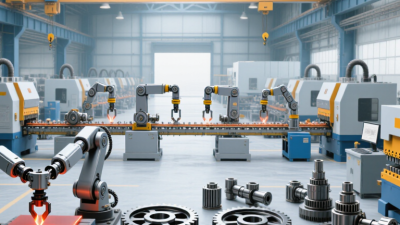
Metalworking plants are moving from isolated machines toward connected production cells. Sensors now track vibration, temperature, tool wear, and cycle time. Operators can review this data from a central dashboard. This reduces guesswork during maintenance planning.

Robotic loading, welding, polishing, and inspection improve repeatability. They also protect workers from repetitive or hazardous tasks. However, automation is not automatically efficient. A poorly planned cell may create bottlenecks beside an expensive robot. Global buyers should examine material flow, operator training, and integration requirements before approving equipment.

Smart factory systems connect machines, production software, quality records, and maintenance schedules. A reliable system can identify unusual spindle behavior before failure occurs. It can also compare output across shifts and facilities. Yet data quality remains a serious weakness. Incorrect sensor settings can produce confident but useless decisions. Cybersecurity, access controls, and local technical support deserve equal attention. Buyers should request practical demonstrations using similar materials and batch sizes. They should also check compatibility with existing equipment and regional safety standards. Small pilot projects often reveal hidden costs, including network upgrades and staff retraining. The technology may perform well, but people still shape the result.

Digital Manufacturing and Data-Driven Production

Digital manufacturing is changing how global buyers evaluate metalworking suppliers. They now ask for traceable process data, not polished promises. Connected machines capture spindle load, tool wear, temperature, and cycle time. This information reveals production risks before parts fail inspection. A stable data trail also supports repeatable quality across shifts and locations. Small details matter. A sudden vibration pattern can signal a dull tool.

Data-driven production works best when operators remain involved. Software can flag unusual readings, but experienced machinists interpret context. Material variation, coolant condition, and fixture pressure may explain an alert. Suppliers should connect machine data with inspection records and maintenance history. Clear timestamps and part-level records make audits faster. Buyers should also examine how data is protected, shared, and retained. Access controls and routine backups are practical requirements. Cheap sensors can create expensive confusion.

The strongest facilities use measurable targets, such as lower scrap, shorter setup time, and steadier energy use. They test changes on one production cell before expanding them. This approach limits disruption and produces evidence for investment decisions. Still, digital systems are not automatically intelligent. Incomplete inputs can generate confident but wrong conclusions. We have seen dashboards hide delays when workers enter data late. That weakness deserves attention. Regular calibration, staff training, and honest review keep analytics useful. Global buyers should request sample reports, correction records, and clear definitions for every metric. Trust grows from verifiable production behavior, not impressive screens.

Sustainable Technologies for Global Metal Buyers

Global metal buyers are looking beyond price, capacity, and delivery dates. Sustainable technology now affects long-term purchasing decisions. In factory assessments, energy monitoring often reveals hidden waste in furnaces, compressors, and cooling systems. A live dashboard can show unusual electricity spikes before they become expensive production problems. Buyers should request measured data, not broad environmental promises.

Lower-carbon melting equipment is gaining attention, especially systems using efficient electric heating and recovered process heat. Closed-loop coolant systems can reduce water consumption and limit discharge. Recycled metal feedstock also lowers resource pressure, but its quality may vary between shipments. Clear testing procedures are essential. Small details matter, such as moisture levels, contamination checks, and furnace yield.

Traceability supports more reliable sourcing. Digital records can connect each batch with its material origin, energy use, and processing route. However, digital systems are not automatically trustworthy. Data gaps remain. Some suppliers still record information manually, which creates errors and delays. Buyers should combine document reviews with site visits, worker interviews, and independent testing. A sustainability claim without operational evidence deserves careful questioning.

The transition is not clean or cheap. Older equipment may require gradual upgrades, and renewable electricity is not equally available in every region. Procurement teams can begin with practical targets, such as reducing idle-time energy or reusing cutting fluids. Progress may look uneven. That is still useful, if the measurements remain honest and comparable.

Top Metalworking Innovation Trends for Global Buyers - Sustainable Technologies for Global Metal Buyers

A buyer-oriented comparison of measurable sustainability technologies and procurement indicators in the metalworking sector

Innovation Trend Primary Sustainability Mechanism Relevant Buyer KPI Indicative Data or Benchmark Commercial Readiness Procurement Considerations
Scrap-Based Electric Arc Furnace Production Uses electricity rather than coal-based reduction and can increase the proportion of recycled ferrous material in steelmaking. Product carbon footprint; recycled content; electricity-source disclosure. Life-cycle emissions are highly dependent on the electricity mix, scrap ratio, furnace efficiency and material yield. Scrap-based production is generally less emissions-intensive than primary ore-based production when low-carbon electricity is available. Established Request a product-level environmental declaration, scrap-content percentage, electricity mix and allocation method for reported emissions.
Renewable Electricity and Long-Term Power Procurement Replaces fossil-intensive grid electricity with renewable generation or verified contractual electricity instruments. Scope 2 emissions; renewable electricity share; hourly or annual matching. Market-based Scope 2 reporting can reach zero only when contractual, geographic and quality requirements are satisfied; physical emissions still depend on the local grid and operating profile. Established Check whether claims are based on physical supply, certificates or contracts, and require clear evidence of instrument retirement and reporting boundaries.
Waste-Heat Recovery Captures heat from furnaces, compressors, cooling systems or exhaust gases for process heating, hot water or electricity generation. Recovered energy per tonne; fuel displacement; payback period. Energy savings vary widely by process temperature, operating hours and heat demand. A site-specific heat balance is required before accepting a savings forecast. Established Compare measured baseline data with post-installation performance and confirm how seasonal production changes are normalized.
Hydrogen-Based Direct Reduced Iron Uses hydrogen as a reducing agent for iron ore, producing water rather than carbon dioxide at the reduction stage when hydrogen is low-carbon. Cradle-to-gate emissions; hydrogen source; hydrogen consumption per tonne. Potential emissions reductions are substantial compared with coal-based reduction, but the result depends on hydrogen production, electricity supply, ore quality and downstream energy use. Early Commercial Ask for technology scale, commissioning status, hydrogen origin, renewable-power evidence and a third-party product-carbon-footprint method.
Low-Carbon Gas and Bio-Based Fuel Substitution Reduces fossil natural-gas consumption in heat-treatment, reheating and melting operations through lower-carbon fuels or electrification. Fuel intensity; combustion emissions; renewable-fuel share. Benefits depend on fuel lifecycle emissions, combustion efficiency, feedstock traceability and equipment compatibility. Direct electrification can be preferable where suitable low-carbon power is available. Scaling Separate direct emissions from lifecycle emissions and verify sustainability criteria, feedstock origin and mass-balance accounting.
AI-Assisted Energy and Process Optimization Uses sensors, process models and predictive analytics to reduce idle time, energy losses, scrap, rework and unplanned downtime. Energy per good tonne; first-pass yield; scrap rate; downtime. Reported savings are site-specific. Reliable measurement requires a defined baseline, stable production boundaries and verification after implementation. Established Require access to anonymized performance data, cybersecurity controls, model validation and a measurement-and-verification plan.
Closed-Loop Water Treatment and Reuse Recirculates process water and removes suspended solids, oil, metals and heat before reuse or controlled discharge. Freshwater intake per tonne; water-reuse rate; discharge load. Water-reuse rates above 90% are technically achievable in some metal-processing systems, but actual performance depends on contamination, local water quality and treatment design. Established Request site-level intake, discharge and reuse figures, together with permits, contaminant limits and laboratory sampling frequency.
Water-Based and Minimal-Quantity Lubrication Reduces petroleum-based cutting-fluid use, waste-treatment requirements and worker exposure through fluid optimization or very low-volume application. Fluid consumption per machine hour; waste volume; tool life; surface quality. Performance is application-dependent. Reduced fluid use must be evaluated together with tool life, part quality, corrosion control and total waste generation. Established Run a controlled production trial and compare tool life, rejection rate, maintenance needs and total cost per accepted part.
Near-Net-Shape Manufacturing and Additive Production Reduces machining allowance, material removal and scrap by producing parts closer to final geometry. Material utilization; buy-to-fly ratio; machining energy; scrap rate. Material savings can be significant for complex or high-value parts, but energy use per kilogram may increase for some additive processes. The complete product life cycle should be assessed. Scaling Compare total material, energy, post-processing, qualification and end-of-life impacts against conventional production for the same functional part.
Digital Product Carbon Footprints and Traceability Provides consistent data on material origin, recycled content, process energy and emissions across the supply chain. Data completeness; verification status; emissions per functional unit. Results are only comparable when system boundaries, allocation rules, functional units and electricity accounting methods are aligned. Established Specify the reporting standard, primary-data percentage, verification level, data vintage and rules for supplier-specific emission factors.

Data note: Benchmarks are indicative, technology-dependent and intended for supplier screening rather than guaranteed performance. Buyers should request site-specific, product-level data covering the reporting period, system boundary, calculation method and independent verification status.

Translate