Top 10 Types of Industrial Welding Equipment to Buy?
Industrial welding equipment is becoming more strategic as manufacturers pursue stronger joints, lower rework, and faster production. MarketsandMarkets estimated the global welding equipment market at approximately USD 17.2 billion in 2023, with projected growth toward USD 22.2 billion by 2028. Fortune Business Insights reports different figures, partly because market definitions vary. That disagreement matters. Buyers should examine methods, capacities, and service requirements rather than trust one headline number.
This guide reviews ten types of industrial welding equipment, including MIG, TIG, stick, submerged arc, laser, and robotic systems. Each option behaves differently beside a steel frame, an aluminum panel, or a thick pressure vessel. Duane K. Miller, a widely recognized welding engineer and author, emphasizes a practical principle: “The best welding process is the one that produces the required result.” That result includes penetration, distortion control, operator safety, repeatability, and total ownership cost.
Price alone can mislead. A low-cost power source may demand expensive consumables, frequent maintenance, or slower training. A robotic cell may improve consistency, yet require programming skills and suitable production volume. AWS industry guidance and the International Organization for Standardization both stress procedure control, qualified personnel, inspection, and documented quality practices. These details are easy to overlook.
They should not be.
The following comparison is useful, but imperfect. Workshop layout, material thickness, duty cycle, energy availability, and local support can change the final choice. Use the list as a purchasing framework, not a universal ranking. Reliable Industrial welding equipment begins with evidence from real production conditions.
Industrial Welding Power Sources and Multi-Process Welders
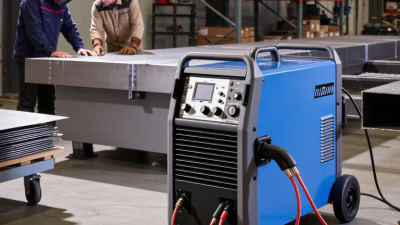
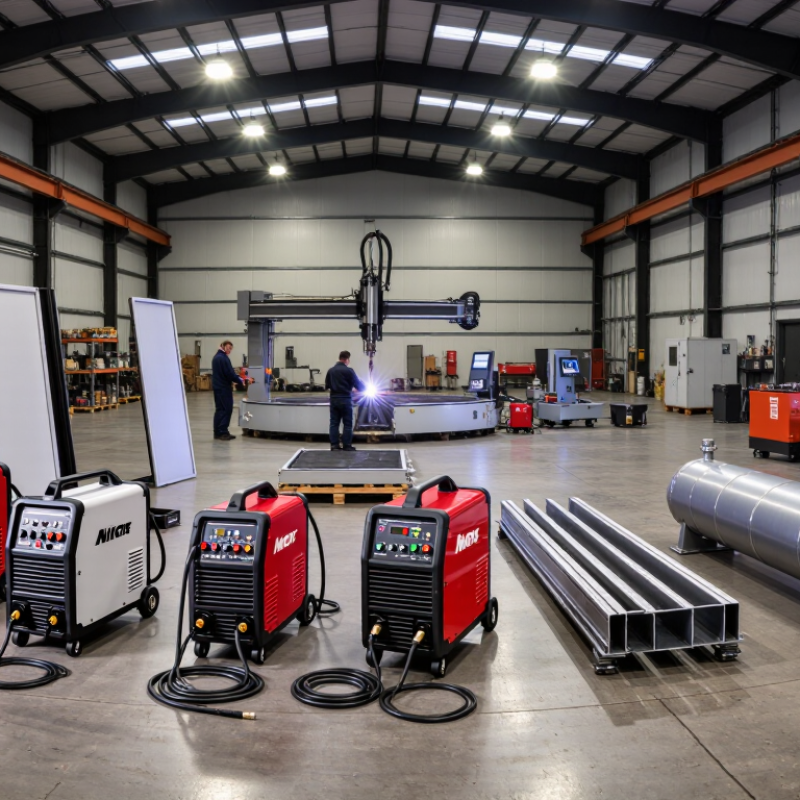
Industrial welding power sources determine arc stability, penetration, and productivity across demanding fabrication environments. In my shop-floor experience, choosing amperage alone is rarely enough. Duty cycle, input power, thermal protection, and cable length also affect daily performance. A compact inverter source may suit field repairs, while a heavier transformer-based unit can tolerate continuous production better. Check the actual welding schedule. Catalog ratings can look impressive.
Multi-process welders add flexibility by combining MIG, TIG, and stick welding in one platform. This reduces equipment changes when a project moves from structural steel to stainless fittings or maintenance work. A reliable unit should provide stable output at low and high amperage, clear controls, and practical wire-feeding performance. Test the arc with the materials and thicknesses your operators use. A machine that performs well on thin sheet may struggle with long, hot passes. That gap matters.
Good purchasing decisions also examine ventilation, grounding, service access, and operator training. Digital displays help, but they cannot replace correct polarity, shielding-gas settings, or torch maintenance. I prefer power sources with documented test data and accessible technical support. Still, no machine is perfect. Some multi-process systems compromise on specialized TIG control or high-duty-cycle output. Record those limitations before approval, then compare them with production needs, maintenance costs, and future workload. Buy for the real process, not the brochure.
MIG, TIG, and Stick Welding Machines for Industrial Fabrication
Industrial fabrication depends on choosing welding equipment for the job, not simply buying the highest-rated machine. MIG, TIG, and Stick welders remain three essential options among the top industrial welding equipment types. MIG machines suit long production runs, structural steel, and repeatable joints. Their continuous wire feed reduces stops, especially when operators weld frames or brackets. However, poor gas coverage can create porous welds and wasted material.
TIG welding machines deliver precise control for stainless steel, aluminum, and thin components. They are valuable when appearance and heat management matter. The process is slower, but careful operators can produce clean, controlled seams. A foot pedal, stable torch, and correct tungsten preparation make a noticeable difference. It is easy to underestimate setup time. That mistake affects real production costs.
Stick welding machines remain practical for outdoor repairs, heavy plate, and areas where wind makes shielding gas unreliable. They tolerate less-than-perfect surfaces better than many other processes. Yet electrode storage and slag removal require discipline. In a working shop, check amperage range, duty cycle, input power, cable length, and service access before purchasing. A machine may perform well on paper but struggle under continuous heat. Trial welds on the actual metal thickness reveal more than a sales specification. Keep qualified welders involved in testing, because comfort and control often expose problems that equipment charts miss.
Top 10 Types of Industrial Welding Equipment
Representative maximum output ratings commonly specified for industrial welding equipment
Output ratings vary by machine design, duty cycle, material thickness, and welding process.
Arc-welding equipment is shown in amperes, while resistance welding is shown in kiloamperes
and laser welding in kilowatts; these values are representative equipment ratings rather than production-market shares.
Flux-Cored, Submerged Arc, and Resistance Welding Systems
Top 10 Types of Industrial Welding Equipment to Buy?
Choosing among industrial welding equipment types starts with joint design, not catalog rankings. Flux-cored arc welding suits outdoor structural work and thick carbon steel. Its tubular wire carries flux and deposits metal quickly. Gas-shielded FCAW needs wind control, while self-shielded FCAW reduces cylinder dependence. Keep a spare liner nearby. Downtime is rarely theoretical.
Submerged arc welding uses granular flux to cover the arc and stabilize long seams. It supports high deposition rates on beams, pressure vessels, and pipe-shop production. However, it performs poorly on short or awkward joints. Buyers should verify flux recovery, travel control, and heat-input monitoring. The International Institute of Welding stresses procedure qualification and controlled heat input for consistent weld properties.
Resistance welding uses pressure and electrical current, making it fast for sheet assemblies. The International Energy Agency reported nearly 14 million electric-car sales worldwide in 2023. That growth strengthens demand for repeatable body and battery joining. Still, current alone cannot guarantee quality. Electrode wear, force calibration, and cooling water require regular checks. The American Welding Society projects a potential U.S. welding workforce shortfall of 330,000 professionals by 2028. Automated monitoring helps, but trained inspection remains essential. I would not buy the largest system first. A smaller qualified cell may expose hidden fixture and maintenance costs.
Welding Robots, Automation Cells, and Workpiece Positioners
Industrial welding equipment now extends beyond the power source and torch. Welding robots, automation cells, and workpiece positioners often determine production consistency. The International Federation of Robotics reported 541,302 industrial robots were installed worldwide in 2023. That figure shows the scale of factory automation, although not every robot performs welding.
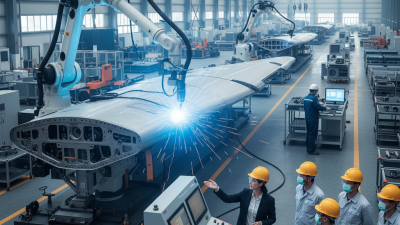
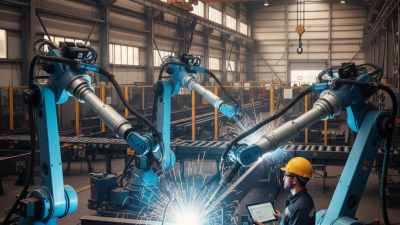
A robotic welding cell suits repeatable joints, stable volumes, and controlled part geometry. Look for torch access, arc monitoring, safety interlocks, and simple fixture changes. A positioner can rotate a frame while the robot maintains a steady weld angle. This reduces awkward manual handling and may improve bead consistency. In practical trials, fixture rigidity matters more than impressive robot speed. A vibrating fixture can ruin a perfect program.
Small errors become expensive.
Industry reports from the International Federation of Robotics also recorded more than 4.28 million industrial robots operating globally at the end of 2023. Buyers should examine integration quality, not only equipment specifications. Check cycle-time evidence, operator training, spare-part access, and programming support. A six-axis robot may be unnecessary for limited joint patterns, while a two-axis positioner could deliver a quicker return. Automation cells also need ventilation, sensing, guarding, and documented maintenance procedures. These details are easy to overlook during demonstrations. I would request sample welds on actual workpieces, because polished showroom parts can hide fixture problems, distortion, and difficult rework.
Welding Generators, Fume Extractors, and Essential Accessories
Top 10 Types of Industrial Welding Equipment to Buy?
Industrial welding starts with a stable power source.
Engine-driven welding generators suit remote repair sites, while inverter welders reduce weight and improve arc control. Transformer welders remain durable for fixed workshops. MIG, TIG, stick, and multi-process machines cover different metals and joint conditions. Spot welders support repeated sheet-metal work, and welding positioners improve access around large assemblies.
Fume extractors deserve equal attention.
A mobile extractor with a flexible arm can capture smoke near the arc, where it forms. Central extraction systems work better for repeated production bays. Check airflow, filter capacity, noise level, and replacement access. A strong fan alone is not enough. Poorly placed extraction can pull fumes across the operator’s breathing zone.
Essential accessories include
grounded work leads, electrode holders, torches, regulators, gas hoses, clamps, welding curtains, wire feeders, and spare contact tips. Choose cables that match the machine’s current and duty cycle. Inspect connectors before each shift. I would not buy equipment from output numbers alone; real performance depends on ventilation, maintenance, operator skill, and site conditions. A compact generator may look efficient, yet struggle during long welds. That detail is easy to miss. Keep a written inspection log, even when the workshop seems orderly.